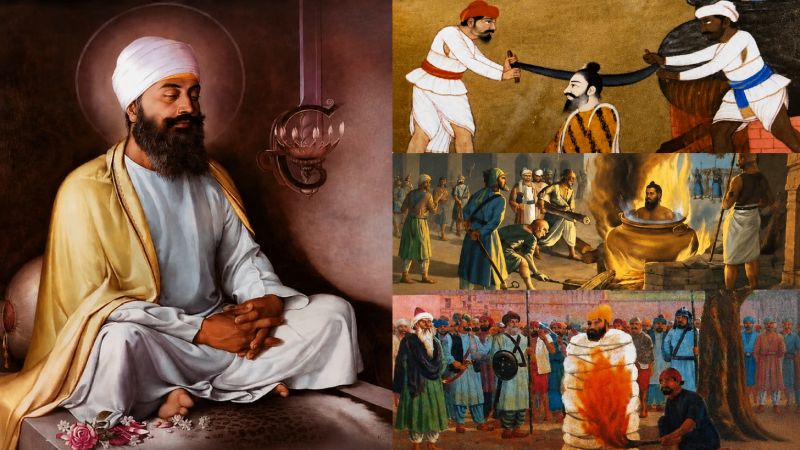
Shri Guru Tegh Bahadur Ji is the ninth Sikh Guru of the ten Gurus. He was honoured with the title "Hind Di Chadar" for sacrificing his life to protect the religious freedom of Hindus. His childhood name was Tyag Mal. He was a deeply spiritual saint, devoted to meditation, and a great warrior.
When is Guru Tegh Bahadur Ji's Prakash Purab, Gurgaddi, and Joti Jot in 2026?
| Event | Date 2026 |
|---|---|
| ਪ੍ਰਕਾਸ਼ ਗੁਰਪੁਰਬ ਸ੍ਰੀ ਗੁਰੂ ਤੇਗ ਬਹਾਦਰ ਸਾਹਿਬ ਜੀ | 7 April 2026 |
| ਗੁਰਿਆਈ ਦਿਵਸ ਸ੍ਰੀ ਗੁਰੂ ਤੇਗ ਬਹਾਦਰ ਸਾਹਿਬ ਜੀ | 1 April 2026 |
| ਸ਼ਹੀਦੀ ਦਿਵਸ ਸ੍ਰੀ ਗੁਰੂ ਤੇਗ ਬਹਾਦਰ ਸਾਹਿਬ ਜੀ | 14 December 2026 |
| ਸੀਸ ਸਸਕਾਰ ਦਿਵਸ ਸ੍ਰੀ ਗੁਰੂ ਤੇਗ ਬਹਾਦਰ ਸਾਹਿਬ ਜੀ | 18 December 2026 |
When & Where was Guru Tegh Bahadur born, and who were his parents?
Guru Tegh Bahadur Ji was born in 1621 at Amritsar to Guru Hargobind Ji, the sixth Sikh Guru, and Mata Nanaki Ji. He was the youngest among six siblings. He was married to Mata Gujri Ji at Kartarpur in 1633. Their son, Gobind Rai (Guru Gobind Singh Ji), was born in 1666 AD.
How was Guru Tegh Bahadur Ji recognised as the Ninth Sikh Guru?
In 1644 AD, Guru Ji, along with his wife and mother, settled in Bakala, where he spent twenty years. He spent most of his time meditating on God. Because of him, the town became famous as Baba Bakala.
The eighth Guru, Guru Har Krishan Sahib Ji, while indicating his successor, spoke only the words "Baba Bakale." Because of this unclear indication, many people claimed the Guruship at Bakala. Finally, Bhai Makhan Shah Lubana, while fulfilling his vow, identified the true Guru from among the twenty-two claimants. Guru Tegh Bahadur Ji received the Guruship on 20 March 1665 AD at the age of 43 years. Soon after becoming Guru, he began preaching Sikhism. They went to Malwa, Bihar, Assam, and Bengal during preaching journeys.
At the request of Rani Champa Devi, Guru Tegh Bahadur Ji founded Chak Nanaki, which is now known as Shri Anandpur Sahib.
In how many Ragas, Sabad and Salok is Guru Tegh Bahadur Bani written?
The writings of Guru Tegh Bahadur Ji included in the Guru Granth Sahib consist of 59 Shabads (in 15 Ragas) and 57 Saloks.
Education of Guru Tegh Bahadur Ji
Guru Tegh Bahadur Ji was sharp-minded and compassionate from childhood. He received his education from Baba Budha Ji and Bhai Gurdas Ji. He gained deep knowledge of Punjabi, Braj, Hindi, Mathematics, History, and Music. Besides this, he also studied Logic, Philosophy, the Bhagavad Gita, Ramayana, Mahabharata, the Quran, and Sufi literature. He was also an expert in horse riding and the use of weapons. Guru Ji was a brave warrior. During the Battle of Kartarpur, he displayed exceptional courage, after which Guru Hargobind Sahib Ji changed his name from Tyag Mal to Tegh Bahadur.
How and where was Guru Tegh Bahadur Ji martyred?
At that time, Aurangzeb was converting Hindus to Islam by force. In 1675, a group of 16 Kashmiri Pandits, led by Bhai Kirpa Ram, arrived at Anandpur Sahib. They requested Guru Tegh Bahadur Ji to protect them from the forced conversions ordered by the Mughal Emperor Aurangzeb.
Guru Gobind Rai told Guru Ji that no one else was more worthy of making this sacrifice. Guru Ji instructed the Pandits to tell Aurangzeb, "First convert Guru Tegh Bahadur; then we will accept Islam." Guru Ji decided to sacrifice himself to protect religious freedom, not just Sikhism.
Guru Ji was arrested at Agra while travelling to Delhi. Despite Aurangzeb's pressure, he refused to convert to Islam. Guru Tegh Bahadur Ji was martyred at Chandni Chowk, Delhi, on 11 November 1675, where Gurdwara Sis Ganj Sahib now stands. Bhai Mati Das, Bhai Dayal Das, and Bhai Sati Das were also martyred along with Guru Ji.
Bhai Lakhi Shah secretly cremated Guru Ji's body by setting his own house on fire. Gurdwara Rakab Ganj Sahib now stands at that place. Bhai Jaita carried Guru Ji's severed head to Anandpur Sahib and earned the title "Guru Ka Beta." Guru Tegh Bahadur Ji remained the Ninth Guru for 10 years, 7 months, and 18 days. After his martyrdom, Guru Gobind Singh Ji became the Tenth Guru.
Why did Guru Tegh Bahadur Ji sacrifice himself?
Guru Tegh Bahadur Ji's sacrifice was for humanity, justice, religious freedom, truth, and equality. He gave his life to protect the freedom of worship and the human rights of another distinct religion.