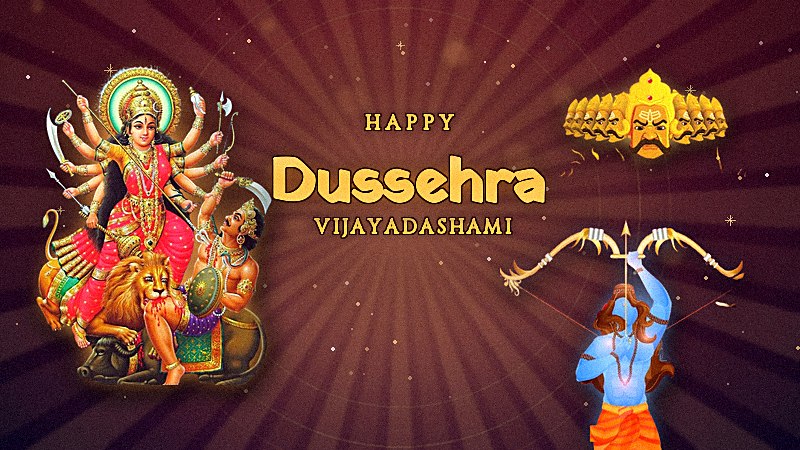
Dussehra is a Hindu festival that is celebrated in India and other countries. It is observed on the 10th day of the bright fortnight (Shukla Paksha) of the month of Ashwin. It is celebrated after Shardiya Navratri. This festival usually falls in September or October. Dussehra marks the victory of good over evil.
Dussehra is also known as Vijayadashami, which means "vijaya" (victory) and "dashami" (the tenth). So it literally means "victory on the tenth day." The word "Dussehra" comes from the Sanskrit "dasha-hara," which means the removal of the ten. It refers to Ravana's ten heads and the ten evils they represent. Therefore, the day has two names that point to the same message. It means victory and getting rid of what holds us back.
When Is Dussehra 2026?
The most auspicious time of the day is the Vijay Muhurat, roughly 2:00 PM to 2:46 PM. However, the auspicious Aparahna Puja time starts and ends from 01:14 PM to 03:30 PM. Dussehra puja timings can change by city. So it is better to check your local panchang.
Vijayadashami in West Bengal in 2026 is on Wednesday, 21st October, 2026.
Why Is Dussehra Celebrated? The Two Great Stories
According to tradition, Dussehra is celebrated to mark two victories of good over evil. One is linked to Lord Rama, while the other is linked to Goddess Durga.
Lord Rama and the Defeat of Ravana
The most well-known story comes from the Ramayana. Ravana was the ten-headed king of Lanka. Ravana abducted Sita, who was the wife of Lord Rama. To save her, Rama gathered an army including Hanuman and fought a long war against Lanka. On the tenth day, Lord Rama defeated and killed Ravana. The war ended, and he freed Sita. That day of victory is Vijayadashami.
This is why North India burns huge effigies of Ravana every Dussehra. They remind people each year of the victory of good over evil, truth over falsehood, and righteousness over ego.
Goddess Durga and the Defeat of Mahishasura
The second story comes from the Devi Mahatmya. The buffalo demon Mahishasura had received a boon that no man or god could kill him. He used this power to frighten and trouble the heavens.
The gods joined their powers to create Durga, a goddess of great strength. She fought Mahishasura for nine nights. The same nights we now observe as Navratri, and killed him on the tenth day.
For Bengal, Assam, and much of eastern India, this is the main part of Dussehra. Vijayadashami is the day when Durga returns to her home. This day, her clay idols are carried to the water for immersion.
The Spiritual Significance of Dussehra
The spiritual meaning of Dussehra is personal, not only about old stories. Ravana's ten heads are seen as ten inner evils. The festival asks each of us to burn our own Ravana, meaning the faults and bad thoughts that stop us from becoming our best selves.
The ten heads are commonly understood as ten weaknesses we all have to some degree:
- Kama (lust) and krodha (anger).
- Lobha (greed) and moha (attachment or delusion)
- Mada (pride or ego) and matsarya (jealousy).
- Selfishness, injustice, cruelty, and arrogance
Seen this way, Ravana was not an ordinary villain. He was a brilliant scholar and a great devotee of Shiva, but his own ego brought him down. That is the warning. Even in us, talent and knowledge can become harmful when pride takes control.
How Dussehra Is Celebrated Across India
Dussehra is celebrated in many different ways across India. Dussehra is also celebrated by Hindu communities in other countries. Nepal has a related major festival called Dashain. Here is how the festival looks in different parts of the country.
North India: Ramlila and Ravana Dahan
In the North, Dussehra is closely linked with Rama. During the nine days before it, groups of people perform Ramlila, open-air plays in public pandals that tell the Ramayana scene by scene and attract large evening crowds.
On Dussehra itself, large effigies of Ravana, his brother Kumbhakarna, and son Meghnad are filled with firecrackers and burned at sunset or as per local timing. Kumbhakarna was Ravana's brother. He is known for his great strength and long periods of sleep. Meghnad was Ravana's powerful son and warrior.
Famous Dussehra Celebrations in Different Parts of India
Kullu Dussehra in Himachal and the Ramnagar Ramlila in Varanasi are among the most famous celebrations. Mysuru Dasara, Bastar Dussehra, Delhi Dussehra, and Kolkata Vijayadashami/Durga Puja also attract people.
East India: Durga Visarjan and Sindoor Khela
Vijayadashami is the emotional and joyful end of Durga Puja in West Bengal, Assam, and Odisha. It is the day the goddess leaves for her heavenly home after spending five days as an honored guest.
Married women take part in Sindoor Khela. They put vermilion on each other before the large idols are taken in a procession and immersed in a river or pond. The immersion, or visarjan, is both a farewell and a promise that she will return next year.
South India: Mysuru Dasara, Ayudha, and Saraswati Puja
In the South, the royal Mysuru Dasara in Karnataka is famous. A ten-day celebration that ends with the Jamboo Savari. It is a procession led by a decorated elephant carrying the idol of Goddess Chamundeshwari.
Two pujas are important across the South. In Ayudha Puja, families worship their tools, instruments and vehicles, thanking them for the things that help them earn a livelihood.
Tamil homes also set up Bommai Golu, tiered displays of dolls and figurines that show stories of gods and everyday life. It is one of the most lovely sights of the season.
West India: Apta Leaves and Shami Puja
In Maharashtra, people exchange the heart-shaped leaves of the apta tree. This is called "sona" (gold), wishing each other prosperity. The custom is linked to a story about Lord Rama and the Pandavas, who hid their weapons in a Shami tree during exile.
Dussehra Puja and Rituals at Home
A simple Dussehra puja at home is about gratitude and a fresh start. Dussehra puja is not the same across India, but there are still some Dussehra puja rituals that you can follow.
- First, you should clean the home and prepare the puja area. Some draw a small rangoli at the entrance.
- You can light a diya, offer flowers, and prepare sweets prasad for your deity.
- Perform Ayudha Puja if you wish, placing a tilak on your tools, laptop, books, or vehicle as a sign of thanks.
- Worship books and instruments for Saraswati Puja, especially when children are at home.
- Share prasad and ask for the blessings of elders to finish the ritual.
Some households also perform Aparajita puja, worshipping the goddess Aparajita ("the undefeated") for success in new efforts. A small silver-plated Shri Ram idol or a Durga image can be a suitable center for the day's prayers.
Dussehra and the Road to Diwali
Dussehra also begins the countdown to Diwali, exactly twenty days later. The connection comes from the Ramayana itself and shapes the festive feeling of the season.
After defeating Ravana on Dussehra, Lord Rama, Sita, and Lakshmana began their journey back to Ayodhya. They reached home twenty days later. The people lit rows of lamps to welcome them. That return home is what we celebrate as Diwali.
Dussehra is considered an auspicious day because it is linked with the victory of Lord Rama over Ravana and Goddess Durga over Mahishasura. Many people also consider it a good day to start new work, a business, a project, studies, or other important activities. So celebrate the Dussehra festival according to your tradition and local rituals. Happy Dussehra 2026 to all of you!