The Sikh community faced its most challenging time around December 1704, during the month of Poh. The month of Poh is known as a solemn and deeply emotional month in Sikh history. Poh (ਪੋਹ) is the tenth month of the Nanakshahi and Punjabi calendars. It runs from December 16, 2026, to January 13, 2027, in the Gregorian calendar. This month is dedicated to remembering the supreme sacrifices of many Sikhs for religious freedom, justice, and human rights. This period is also remembered as Shaheedi Hafta, or Shaheedi Week for Sikhs, when the elder and younger Sahibzadas, Mata Gujri Ji, and many other Sikhs attained martyrdom for their faith while fighting against the Mughal Empire and enduring torture.
Shaheedi Hafta 2026 Date: Martyrdom Week for Sikhs
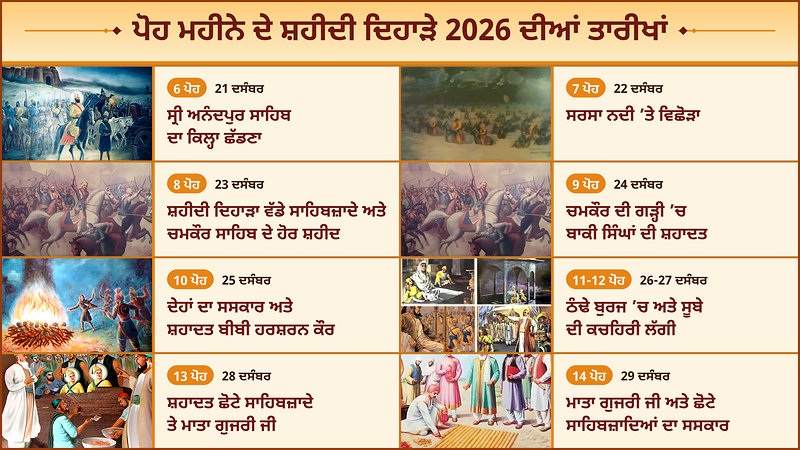
Shaheedi hafta December 2026 will start on 21 December 2026 (6 Poh) and end on 28 December (13 Poh). Guru Gobind Singh Ji lost his family, home, and forces within this one week. You can check the following dates for Shaheedi Week 2026 and the Shaheedi dihare history of Vadde and Chote Sahibzade.
| ਤਾਰੀਖ | ਦਿਨ | ਪੋਹ | ਯਾਦ ਕੀਤੀ ਜਾਣ ਵਾਲੀ ਘਟਨਾ |
|---|---|---|---|
| 21 ਦਸੰਬਰ 2026 | ਸੋਮਵਾਰ | 6 ਪੋਹ | ਸ੍ਰੀ ਗੁਰੂ ਗੋਬਿੰਦ ਸਿੰਘ ਜੀ ਵੱਲੋਂ ਪਰਿਵਾਰ ਅਤੇ ਸਿੰਘਾਂ ਸਮੇਤ ਕਿਲ੍ਹਾ ਸ੍ਰੀ ਅਨੰਦਗੜ੍ਹ ਸਾਹਿਬ ਛੱਡਣਾ |
| 22 ਦਸੰਬਰ 2026 | ਮੰਗਲਵਾਰ | 7 ਪੋਹ | ਸਰਸਾ ਨੰਗਲ ਨਦੀ ਵਿਖੇ ਗੁਰੂ ਪਰਿਵਾਰ ਦਾ ਵਿਛੋੜਾ |
| 23 ਦਸੰਬਰ 2026 | ਬੁੱਧਵਾਰ | 8 ਪੋਹ | ਸ਼ਹੀਦੀ ਦਿਹਾੜਾ ਵੱਡੇ ਸਾਹਿਬਜ਼ਾਦੇ - ਸਾਹਿਬਜ਼ਾਦਾ ਬਾਬਾ ਅਜੀਤ ਸਿੰਘ ਜੀ, ਬਾਬਾ ਜੁਝਾਰ ਸਿੰਘ ਜੀ ਅਤੇ ਚਮਕੌਰ ਸਾਹਿਬ ਦੇ ਹੋਰ ਸ਼ਹੀਦ |
| 24 ਦਸੰਬਰ 2026 | ਵੀਰਵਾਰ | 9 ਪੋਹ | ਗੰਗੂ ਦੀ ਸੂਹ ਮਗਰੋਂ ਮਾਤਾ ਗੁਜਰੀ ਜੀ ਅਤੇ ਛੋਟੇ ਸਾਹਿਬਜ਼ਾਦਿਆਂ ਨੂੰ ਗ੍ਰਿਫ਼ਤਾਰ ਕਰਕੇ ਮੋਰਿੰਡੇ ਵਿੱਚ ਕੈਦ ਕੀਤਾ ਜਾਂਦਾ ਹੈ। ਅਤੇ ਚਮਕੌਰ ਸਾਹਿਬ ਵਿਖੇ ਬਾਕੀ ਸਿੰਘਾਂ ਦੀ ਸ਼ਹੀਦੀ ਹੁੰਦੀ ਹੈ। |
| 24 ਦਸੰਬਰ 2026 | 10 ਪੋਹ | ਚਮਕੌਰ ਸਾਹਿਬ ਵਿਖੇ ਸ਼ਹੀਦ ਹੋਏ ਸਿੰਘਾਂ ਦੀ ਦੇਹਾਂ ਦਾ ਸਸਕਾਰ ਅਤੇ ਸ਼ਹਾਦਤ ਬੀਬੀ ਹਰਸ਼ਰਨ ਕੌਰ | |
| 25 ਦਸੰਬਰ 2026 | ਸ਼ੁੱਕਰਵਾਰ | 10 ਪੋਹ | ਗੁਰੂ ਸਾਹਿਬ ਮਾਛੀਵਾੜੇ ਦੇ ਜੰਗਲਾਂ ਵੱਲ ਚਲੇ ਗਏ, ਜਦਕਿ ਛੋਟੇ ਸਾਹਿਬਜ਼ਾਦਿਆਂ ਅਤੇ ਮਾਤਾ ਗੁਜਰੀ ਜੀ ਨੂੰ ਸਰਹਿੰਦ ਦੇ ਠੰਡੇ ਬੁਰਜ ਵਿੱਚ ਕੈਦ ਕਰ ਦਿੱਤਾ ਗਿਆ। |
| 26 ਦਸੰਬਰ 2026 | ਸ਼ਨੀਵਾਰ | 11 ਪੋਹ | ਛੋਟੇ ਸਾਹਿਬਜ਼ਾਦਿਆਂ ਦੀ ਵਜ਼ੀਰ ਖ਼ਾਨ ਦੀ ਕਚਹਿਰੀ ਵਿੱਚ ਪੇਸ਼ੀ। |
| 27 ਦਸੰਬਰ 2026 | ਐਤਵਾਰ | 12 ਪੋਹ | ਕਚਹਿਰੀ ਵਿੱਚ ਮੁੜ ਪੇਸ਼ੀ, ਧਰਮ ਬਦਲਣ ਤੋਂ ਇਨਕਾਰ ਅਤੇ ਨਵਾਬ ਮਲੇਰਕੋਟਲਾ ਵੱਲੋਂ ਹਾਅ ਦਾ ਨਾਅਰਾ। |
| 28 ਦਸੰਬਰ 2026 | ਸੋਮਵਾਰ | 13 ਪੋਹ | ਸਾਹਿਬਜ਼ਾਦਾ ਬਾਬਾ ਜ਼ੋਰਾਵਰ ਸਿੰਘ ਜੀ, ਬਾਬਾ ਫ਼ਤਹਿ ਸਿੰਘ ਜੀ ਅਤੇ ਮਾਤਾ ਗੁਜਰੀ ਜੀ ਦਾ ਸ਼ਹੀਦੀ ਦਿਹਾੜਾ। |
| 29 ਦਸੰਬਰ 2026 | ਮੰਗਲਵਾਰ | 14 ਪੋਹ | ਸੰਸਕਾਰ ਛੋਟੇ ਸਾਹਿਬਜ਼ਾਦੇ ਅਤੇ ਮਾਤਾ ਗੁਜਰੀ ਜੀ |
The Month of Poh in Sikh History: Remembering the Sahibzadas, Mata Gujri Ji, and Sikh Martyrs
The family of Sahib Sri Guru Gobind Singh Ji Maharaj attained martyrdom during the month of Poh. Many other great Sikh men and women also attained martyrdom. To honour and remember their sacrifices, Sikhs visit these places every year, recite Gurbani, perform Kirtan, and narrate accounts of Sikh history.
Qila Anandpur Garh Fort had been under siege for nearly seven months. When the siege began, Guru Gobind Singh Ji Maharaj announced that those with families could leave Anandpur Sahib. After hearing this announcement, some families left Anandpur Sahib and settled elsewhere.
The number of those who stayed with Maharaj Ji and stood by him in Anandpur Garh Fort is said to have been around 500. These included women and children. Maharaj Ji’s four Sahibzadas, Mata Gujri Ji, and Sahib Sri Guru Gobind Singh Ji Maharaj himself, along with his wives, were present there.
Essential supplies, food, and water inside Anandpur Garh Fort were running out. Very little remained, and the Singhs even boiled tree bark and leaves and drank the water.
Entering Anandpur Fort was very difficult for the enemies. The enemies also used several deceitful tactics to get its gate opened.
The Mughals planned to swear false oaths. They thought that if they could somehow get Guru Sahib and the other Singhs to leave Anandpur Sahib, they could defeat and kill them.
With this plan in mind, they wrote a letter to Maharaj Ji on the cover of the Holy Quran. The Hill Rajas made cows out of dough and swore oaths upon them. False oaths were also sworn upon the Holy Quran, promising, “If you leave this place, we will not harm you.”
However, they were filled with greed. They wanted Guru Sahib’s Singhs to leave with their forces and with their belongings and treasure so that they could attack them and loot their belongings.
But Guru Gobind Singh Ji Maharaj was all-knowing, the embodiment of God who had appeared in the world with divine power. He had his Singhs load rubbish and discarded items onto mules, cover them with silk cloths, and send them out into the battlefield.
When the enemies learned that these goods were coming, they thought they were valuable and attacked to loot them. But when they found nothing of value, they were left embarrassed. They realised how wise and knowledgeable the Guru was.
Then they made another plan and used another trick. They again told Maharaj Ji, “We now swear that if you leave by this route, we will not harm you.”
When Mata Gujri Kaur Ji and the other Singhs requested that Guru Sahib leave, Maharaj Ji had to leave Anandpur Garh Fort. Before leaving, he said, “If we leave Anandpur Garh Fort, you yourselves will be responsible for whatever happens to us afterwards, whether good or bad.”
Guru Gobind Singh Ji accepted Punj Pyare's order, and on the night of 6 Poh, Maharaj Ji left Anandpur Garh Fort and set out towards Chamkaur with the Singhs.
When Maharaj Ji had passed Kiratpur Sahib, the enemy forces broke all their oaths and promises and attacked him. They wanted to overpower Maharaj Ji, but Guru Sahib, being all-knowing, had already formed groups of Singhs and sent them to confront the enemy.
Bhai Udai Singh and other Singhs attained martyrdom, while Mughal Empire soldiers and Bhai Bachittar Singh Ji were severely wounded. Unable to survive his deep wounds and injuries, Bhai Bachittar Singh Ji attained martyrdom two days later at Kotla Nihang Khan.
On 7 Poh, the family became separated at the Sarsa River. Following this separation, Sahib Sri Guru Gobind Singh Ji Maharaj, along with 40 Singhs and his two elder Sahibzadas, Baba Ajit Singh Ji and Baba Jujhar Singh Ji, reached Chamkaur. Mata Gujri Kaur Ji and the younger Sahibzadas headed towards the village of Saheri. Some say that Mata Sundari Ji and Mata Sahib Kaur Ji were at Anandpur Sahib, but they had been separated at Sarsa and then went to Delhi under the protection of Bhai Mani Singh Ji.
The Battle of Chamkaur on 8 Poh
Guru Gobind Singh Ji Maharaj reached Chamkaur and stayed in a small fortress. When the enemies learnt that Guru Sahib had reached Chamkaur, they surrounded the fortress.
On 8 Poh, a battle took place at Chamkaur Sahib. Guru Sahib formed groups of five Singhs and sent them out from the fortress to fight. The Singhs went out onto the battlefield and attained martyrdom. Among them were his elder sons, Sahibzada Baba Ajit Singh Ji and Baba Jujhar Singh Ji, and three of the original Panj Pyare.
Then, at the request of Bhai Sangat Singh Ji and the Panj Pyare, Guru Gobind Singh Ji had to leave this place as well. Maharaj Ji clapped as he left the fortress. He departed from there with two or three of his Singhs.
The remaining Singhs keep fighting till 9 Poh. Bibi Sharan Kaur cremated the bodies of the Singhs who had attained martyrdom at Chamkaur, including the body of her own husband. It is said that Bibi Sharan Kaur was also then thrown into the same fire and martyred.
Mata Gujri ji and Chote Sahibzade Shaheedi
Mata Ji rested at the house of Kumma Mashki on 7 Poh. After staying there for some time, they continued their journey with Gangu Brahman. On 8 Poh, they reached Gangu Brahman village of Saheri. Gangu, also known as Gangu Brahmin, is said to have been a cook in the Guru’s household.
Gangu betrayed Mata Gujri Ji and the Chhote Sahibzade and had them arrested. Mata Ji and the Sahibzadas were kept in prison at Morinda for a day on 9 Poh. Mata Gujri Kaur Ji and the younger Sahibzadas were taken to Sirhind. Wazir Khan ordered them to be kept in 'Thanda Burj' on 10 Poh. Wazir Khan, also known as Suba Sirhind. Baba Moti Ram Mehra provided milk to Mata Gujri Ji and the younger Sahibzadas during their imprisonment at 'Thanda Burj'.
Both Sahibzadas were presented before Wazir Khan’s court on 11 and 12 Poh. When the younger Sahibzadas were brought before the court, they were first offered many temptations. These included toys, wealth, marriage to the daughters of those offering these rewards, and various other promises.
However, they remained firm and clearly refused. Baba Zorawar Singh Ji and Baba Fateh Singh Ji were Guru Sahib’s sons, and his teachings lived within them.
Wazir Khan wanted the Sahibzadas to bow before him and accept Islam, but both refused. As a result, they were sentenced to death on 12 Poh.
The Nawab of Malerkotla opposed this decision, even though his brother had been killed in battle by Sahib Sri Guru Gobind Singh Ji Maharaj. The governor of Sirhind did not listen to anyone, and an order was issued to brick the younger Sahibzadas, Baba Zorawar Singh Ji and Baba Fateh Singh Ji, into a wall.
On 13 Poh, both Sahibzadas were bricked alive into a wall and martyred. Some scholars say that Mata Gujri Kaur Ji was also thrown from the Thanda Burj, while others say that she left this world and passed away of her own will.
On 14 Poh, the last rites of the younger Sahibzadas and Mata Gujri Ji were performed by Diwan Todar Mal and Moti Ram Mehra.
Gurdwaras built in memory of Char Sahibzade and Mata Gujri Ji
Gurdwara Katalgarh Chamkaur Sahib is built where Baba Ajit Singh Ji and Baba Jujhar Singh Ji were martyred. Gurdwara Bhora Sahib marks the site of the historic wall where Baba Zorawar Singh Ji and Baba Fateh Singh were bricked alive. Thanda Burj Sahib, also called Burj Mata Gujri Ji, is the place where Mata Gujri Ji and the two younger Sahibzadas, Baba Zorawar Singh Ji and Baba Fateh Singh Ji, were imprisoned before their martyrdom. Gurdwara Joti Sarup Sahib is the place where Mata Gujri Ji and both younger Sahibzadas were cremated. Diwan Todar Mal Ji arranged the land for their cremation.
During the month of Poh, Sikhs remember the history of these great Sikh men and women and learn from their lives. Safar-e-Shahadat (The Journey of Martyrdom) is a programme that is organised every year to learn about this great Sikh history. Sikhs also take their children to visit the Gurdwaras at the places where the four Sahibzadas attained martyrdom. Veer Bal Diwas is observed every year on December 26 to honor the martyrdom of the Sahibzade.