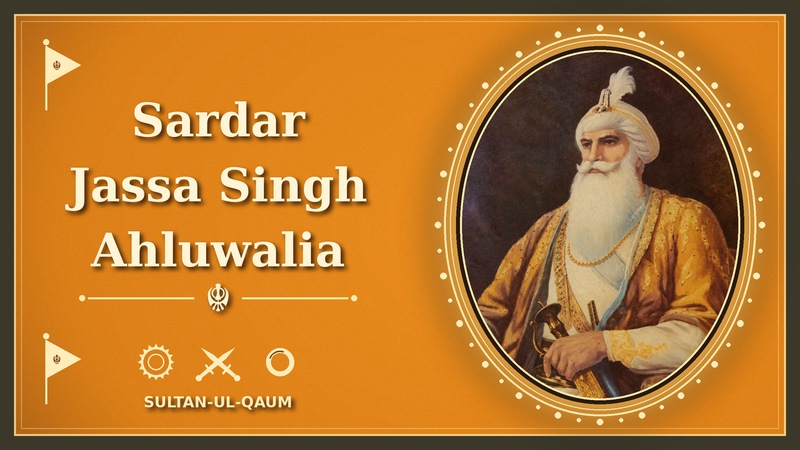
Jassa Singh Ahluwalia was a prominent Sikh leader and military commander. He was the supreme leader of the Dal Khalsa among the Sikhs in the 18th century. He played an important role in transforming the Sikh community from a persecuted group into a sovereign and independent political power in Punjab.
When are Jassa Singh Ahluwalia’s birth anniversary and death anniversary in 2026?
| Event | Date 2026 |
|---|---|
| ਜਨਮ ਦਿਹਾੜਾ ਸ. ਜੱਸਾ ਸਿੰਘ ਜੀ ਆਹਲੂਵਾਲੀਆ | 19 May 2026 |
| ਅਕਾਲ ਚਲਾਣਾ ਸ. ਜੱਸਾ ਸਿੰਘ ਜੀ ਆਹਲੂਵਾਲੀਆ | 23 October 2026 |
When and where was Jassa Singh Ahluwalia born?
Jassa Singh was born on 3 May 1718 to Badar Singh and Jiwan Kaur in the village of Ahlu, near Lahore. As a resident of Ahlu village, he became known as “Ahluwalia.” His father passed away during his childhood.
What was the world like when Jassa Singh Ahluwalia was born?
When Jassa Singh Ahluwalia was born, Punjab and its surrounding areas were in danger. There was political turmoil everywhere, and the Sikh community was suffering under Mughal oppression.
After the arrest of Banda Singh Bahadur at Gurdas Nangal in December 1715 and his martyrdom in Delhi in 1716, the Mughal governors intensified a systematic campaign to locate and eliminate Sikhs. To escape genocide and oppression, many Sikhs had to leave their homes and seek refuge in Punjab’s dense forests, river regions, and foothills. As a result, border provinces such as Punjab were in a state of instability and anarchy.
Jassa Singh Ahluwalia also faced severe financial hardship and difficulties during his childhood. He was only four years old when his father, Sardar Badar Singh, passed away. His mother took full responsibility for his early upbringing and deeply instilled Sikh principles in him. She taught him Gurbani and religious music. She taught him that no matter how severe poverty or hardship became, he should never follow the wrong path.
After his father’s death, Jassa Singh and his mother moved to Delhi and lived under the care and protection of Mata Sundari Ji, the wife of Guru Gobind Singh Ji. They stayed there for about seven years. During this time, Jassa Singh studied Persian and history. His diplomatic understanding enabled him to handle complex and important political diplomacy.
Adoption and education by Nawab Kapur Singh
In 1729, his maternal uncle, Bagh Singh, brought him to Punjab. Jassa Singh and his mother went to Kartarpur on the occasion of a Gurpurab. There, Nawab Kapur Singh, the supreme leader of the Khalsa Panth, was deeply impressed by Jassa Singh’s melodious singing of “Asa Di Vaar” in the morning. Nawab Sahib requested his mother to leave Jassa Singh in his care. In this way, he more or less adopted him, and Jassa Singh became his adopted son. There, he served in the langar, fanned others, and cared for the horses. He also mastered Sikh martial arts, the use of weapons, and military strategies. Nawab Kapur Singh had said, “The Panth made me a Nawab; may it make you a king.” This prophecy later came true.
What challenges did Jassa Singh Ahluwalia face while helping establish Sikh sovereignty?
While helping establish Sikh sovereignty in the 18th century, Jassa Singh Ahluwalia faced serious military, social, and political obstacles. Seven massacres of Sikhs took place during the times of Bahadur Shah, Farrukhsiyar, Zakariya Khan, Yahya Khan, and Mir Mannu. The Afghans and Persians carried out nine brutal invasions of northern India. Bhai Mani Singh, Bhai Taru Singh, and many other Singhs were martyred. The Lesser Holocaust took place on 1 May 1746, in which about 7,000 Sikhs were killed. Jassa Singh remained with Nawab Kapur Singh in the Buddha Dal from the beginning. He united and organized the misls and contributed to humanitarian relief and rescue efforts.
In March 1748, Sri Amritsar was liberated from Salabat Khan under Jassa Singh’s leadership. Ram Rauni, later known as Ramgarh, was constructed.
Nawab Kapur Singh passed away in October 1753. He handed over the ceremonial staff of Guru Gobind Singh Ji in his possession to Jassa Singh.
On Vaisakhi in 1754, Jassa Singh was appointed the political and religious Jathedar of the Khalsa.
Historical role: He became the supreme military commander of the Dal Khalsa and leader of the Ahluwalia Misl, and was honored with the title “Sultan-ul-Qaum” (King of the Nation).
What were Jassa Singh Ahluwalia’s achievements?
He played an important role in establishing the Sikhs as a sovereign power in Punjab, as given below:
- He was appointed the joint supreme leader of the Sikh misl “Dal Khalsa” in 1748 and led the community during major Afghan and Mughal attacks.
- The Sikh community gave Jassa Singh Ahluwalia the title “Sultan-ul-Qaum” (King of the Nation).
- Ahmad Shah Durrani invaded Punjab several times. The Singhs continued to fight using guerrilla tactics.
- In 1757, Darbar Sahib was desecrated. Jassa Singh won the Battle of Mahilpur, and the Sikhs took Jalandhar.
- In 1758, the Singhs and the Marathas captured Sirhind and Lahore.
- In 1761, Jassa Singh freed about 2,200 Hindu women held captive by the Durranis and returned them to their homes. Because of this, he was called “Bandi Chhor.”
- On 5 February 1762, the Vadda Ghallughara took place near Kup. Thousands of Sikh men, women, and children were killed. One widely cited estimate is approximately 25,000, although historical estimates vary. Jassa Singh reportedly suffered 22 wounds.
- On 14 January 1764, Sikh forces attacked Sirhind and defeated its Afghan governor, Zain Khan, who was killed.
- Jassa Singh offered his share of nine lakh rupees on the “Guru’s cloth” for service at Darbar Sahib.
- Malerkotla was left untouched because its Nawab had raised his voice in protest against the killing of the Sahibzadas.
- In April 1765, the Singhs gained permanent control of Lahore.
- Jassa Singh Ahluwalia’s capital was Kapurthala.
About Him
He was handsome, tall, skilled with the sword and bow, contented, and firm in his faith. He was among the few Sardars who knew Persian and Urdu.
He treated Hindus and Muslims fairly and did not harm women or those who laid down their weapons in battle. He led efforts to free Punjab from the Mughals and Durranis. Maharaja Ranjit Singh’s kingdom was later built on this foundation.
Jassa Singh Ahluwalia died on 20 October 1783, aged 65. His memorial stands within the precincts of Gurdwara Baba Atal in Amritsar.