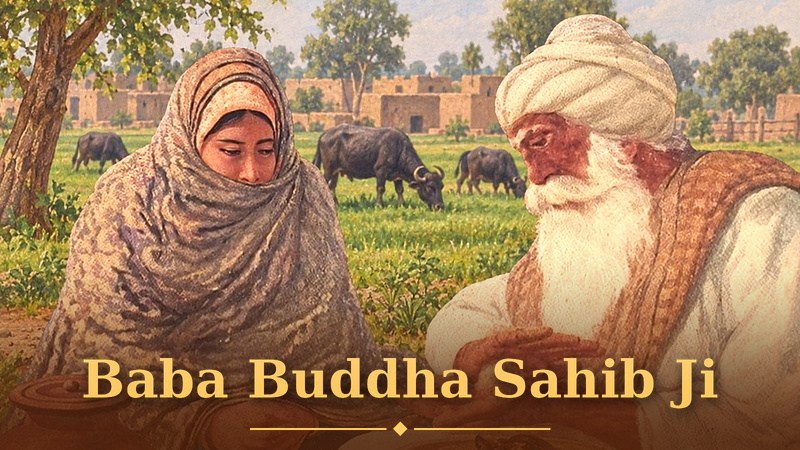
Baba Buddha is one of the earliest Sikhs, a Sant and a Sewak who had the opportunity and blessing to live with the first six Sikh Gurus. During this period, he served as a pillar of humility, devotion, and guidance for the early Sikh community. He was one of the earliest Sikhs to enter the faith through Guru Nanak.
Baba Buddha Ji Janam Dihara 2026
| Event | Date |
|---|---|
| ਜਨਮ ਦਿਹਾੜਾ ਬਾਬਾ ਬੁੱਢਾ ਜੀ (ਕੱਥੂਨੰਗਲ) | 23 October 2026 |
| ਜੋੜ-ਮੇਲਾ ਬੀੜ ਬਾਬਾ ਬੁੱਢਾ ਜੀ (ਠੱਠਾ) | 7 October 2026 |
| ਜੋੜ-ਮੇਲਾ ਬਾਬਾ ਬੁੱਢਾ ਜੀ (ਰਮਦਾਸ) | 30 September 2026 |
When and where was Baba Buddha Ji born?
Baba Buddha Ji was born on October 7, 1506, in the village of Kathu Nangal, near Amritsar, Punjab. The date given is 7 Katak 1564 Bikrami.
About the Family of Baba Buddha Ji
Baba Budha Ji's father's name was Bhai Sugha Randhawa. His mother's name was Mata Gaura. Baba Buddha Ji's childhood name was Bura because he was very wise even in his childhood and became known as Buddha. Baba Ji was married to Miroya in the village of Anchal. It is believed that Guru Nanak's sons and Mata Sulakhni attended his marriage. They had four sons: Bhai Sudhari, Bhai Bhikhari, Bhai Mahima, and Bhai Bhana.
Meeting Guru Nanak and getting the name Buddha
For some time, Baba Buddha Ji lived in Kathu Nangal Nagar. But after meeting Guru Nanak Dev Ji for the first time in the village of Ramdas at the age of 11, he later moved to Kartarpur to be with Guru Nanak Ji. The Bala Janamsakhi tells a story of his meeting with the Guru. He offered milk to Guru Nanak Dev Ji and asked how to be freed from death. The Guru said he spoke with the wisdom of the old, and from then on he was called Buddha. Baba Buddha Ji was a farmer. He also took care of Langar sewa at Gurdwaras. Guru Nanak chose him to apply the tilak (the mark of Guruship) to Bhai Lehna (Guru Angad), using five paise and a coconut.
Baba Buddha Ji's Contribution to Sikhism
He applied the tilak (mark of Guruship) to the first five Sikh Gurus. He found Guru Angad in hiding at Khadur Sahib. It is said that at the time of giving Guruship, Baba Buddha Ji himself performed the task of applying the Tilak to the Guru who was being appointed. He was always interested in serving langar in the Guru Ghar. Baba Buddha Ji served the Guru Ghar from the time of Guru Nanak Ji to Guru Hargobind Sahib. He is credited with laying the foundation of Gurdwara Dera Baba Nanak. He served in building Goindwal and in the founding of Amritsar. He oversaw the kar-seva (voluntary labour) of the Ramdas Sarovar. He assisted in the construction of Harmandir Sahib. He helped defeat the plans of rivals who opposed the Gurus and claimed the Guruship.
Who was the first head granthi of Harmandir Sahib?
Baba Buddha Ji was the first head granthi of Harmandir Sahib when Guru Arjan Dev installed the Adi Granth there. He took the Hukamnama from the Guru Granth Sahib Ji.
Connection between Baba Buddha and Guru Hargobind Ji
Baba Buddha Ji and Sri Hargobind Sahib Ji had an extremely deep relationship. According to Sikh tradition, before the birth of Hargobind Singh Ji, when Mata Ganga Ji (wife of Guru Arjan Dev Ji) asked Baba Buddha Ji for a blessing for their son, Baba Buddha Ji, in a playful manner, broke an onion with his hand and blessed them that they would have a son who would similarly continue to strike down the heads of tyrants. After a few years, Sri Hargobind Ji was born. Thus, according to Sikh tradition, Guru Hargobind Sahib Ji was born with the blessings of Baba Budha Ji. Today, couples who have no children pray at his three Gurdwaras, Bir Baba Budha Sahib, Kathu Nangal and Ramdas, by offering misse prashade (flatbread) and onions.
Sri Guru Hargobind Sahib Ji received his basic education and training in the use of weapons from Baba Buddha Ji. Baba Ji himself performed the ceremony of applying the Tilak and the ceremony of Guruship to establish Guru Hargobind Singh Ji as the sixth Sikh Guru.
When Guru Hargobind Ji was preparing for leadership and studying religious matters, he told Baba Buddha Ji that he wanted two swords – Miri and Piri: one representing worldly power and the other representing spiritual authority, knowledge, and learning. Guru Hargobind Singh Ji entrusted the work of preparing the Akal Takht Sahib to Baba Buddha Ji and Bhai Gurdas Ji.
When Emperor Jahangir imprisoned Guru Hargobind Ji in the Gwalior Fort, Baba Buddha Ji, along with Bhai Gurdas, helped in managing the worldly and spiritual affairs of the Sikh community and in carrying out the necessary arrangements. Baba Buddha started the shabad-chowki (hymn-singing) tradition to keep Sikh morale up. He also met the Guru at Gwalior and worked for his release. Bhai Gurdas praises Baba Buddha Ji in his Vaars.
Last Moments and Rites
In old age, Baba Buddha Ji handed his son Bhai Bhana over to Guru Hargobind's service and went back to Ramdas. When Baba Buddha Ji passed away at Ramdas's place on 14 Maghar 1688 Bikrami (17 November 1631), Guru Hargobind Ji was present there, and Guru Ji himself performed his last rites. His son Bhana was given his turban and place. Baba Buddha Ji lived for 124 years according to traditional Sikh historical sources, and he saw six Gurus.