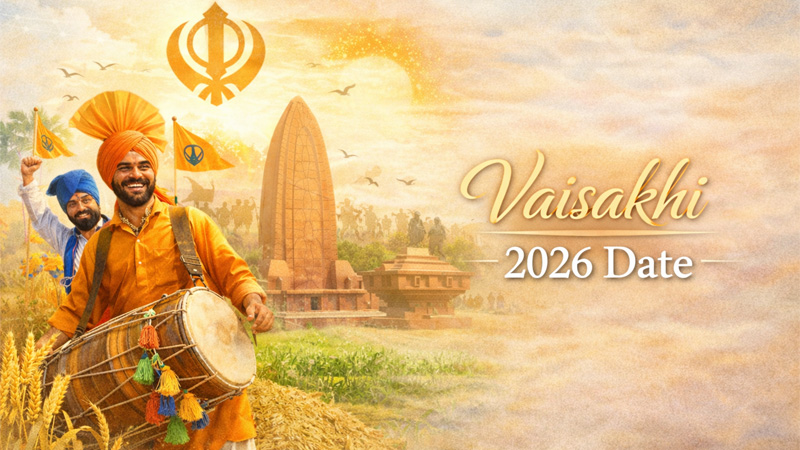
Vaisakhi or Baisakhi is one of the most important and well-known festivals celebrated in India and other countries. Mostly it is celebrated in Punjab, North India, and Punjabi communities around the world. It is celebrated as Pohela Boishakh, Bohag Bihu, Vishu, and Puthandu in other regions of India. This day marks the birth of the Khalsa, as Guru Gobind Singh founded the Khalsa Panth in 1699.
When is Vaisakhi in 2026?
Vaisakhi in 2026 falls on Tuesday, April 14th. Baisakhi is usually celebrated every year around April 13th or 14th. The Baisakhi festival falls in the first month of Bikram Samvat in the Hindu calendar. The Vaisakhi date remains mostly fixed because Vaisakhi follows the solar Nanakshahi calendar, which aligns with the astronomical entry of the Sun into Aries (Mesh Sankranti). This day is a public holiday in Punjab, Jammu and Kashmir, Haryana, and other parts of North India.
Historical Background of Baisakhi
Even before Sikhism, Baisakhi was observed as a solar new year across South Asia. That is why Hindus also celebrate Baisakhi as a solar new year (Mesha Sankranti) and spring harvest festival. As per the Hindu calendar, the Sun's entry into Aries is the reason they take holy dips in sacred rivers like the Ganges, worship, and meditate.
It is also the beginning of the harvest season of the Rabi crop, especially wheat. It signals the beginning of a fresh farming cycle. Farmers plan the next season's crops, such as paddy, bajra, popcorn, and more. It also signals the end of winter and the onset of summer in North India.
Significance of Vaisakhi for Sikhs
Vaisakhi has a very special and deeper importance for Sikhs because the 10th Guru, Guru Gobind Singh, established and organized the Sikhs into Khalsa Panth on this day, 13 April 1699, at Anandpur Sahib. Guru Gobind Singh Ji gathered people in a congregation (an estimates ranging from tens of thousands up to 80,000 people present) and asked for people who were willing to give their heads. Five brave men stepped forward who were from different castes and regions. After a divine Amrit ceremony, they became the Panj Pyare (Five Beloved Ones). This event transformed the Sikh community and gave it its unique identity, values, and the distinct Khalsa code of conduct.
How Vaisakhi is Celebrated
At Vaisakhi, Sikhs visit Gurudwaras, take part in Nagar Kirtans, hold special prayers, listen and read Gurbani. Free food is served to all. People sing hymns across the city in Nagar Kirtan Vaisakhi. The Guru Granth Sahib Ji is carried on a decorated float, called a palanquin. The Panj Pyare lead the procession in traditional blue and saffron clothes, and devotees walk behind them singing Gurbani.
You will also see Amrit Sanchar programs on Vaisakhi in many Gurudwaras. People take Amrit and formally become part of the Khalsa. Vaisakhi is considered the most auspicious day for this, connecting a new initiate directly to that original sacred act. The Nishaan Sahib flag at Gurudwaras is also replaced with a new one on this day.
The Jallianwala Bagh Massacre
The Jallianwala Bagh Massacre also happened on Vaisakhi, on April 13, 1919. Thousands of unarmed people had gathered at Jallianwala Bagh in Amritsar to celebrate this festival. British General Reginald Dyer ordered troops to open fire on the crowd. Hundreds of people were killed in this tragedy, making Vaisakhi a day of both celebration and solemn remembrance.
Traditional Foods and Dress
Farmers thank God for the ripened rabi crops. People also enjoy Bhangra and Gidda folk dances, fairs, and festive foods. People mostly wear traditional clothes on Baisakhi, such as kurta-pajama, colorful turbans, salwar kameez, and Punjabi suits. Foods traditionally eaten on Vaisakhi are Karah Prasad, Chole Bhature and Puri, Kheer, Dal Makhani, Makki di Roti with Sarson da Saag, and Jaggery.
Vaisakhi Around the World
Vaisakhi is celebrated outside India with great fervor, particularly in countries with large Sikh populations like the UK, Canada, and the USA. The Surrey, Canada, Vaisakhi Parade is the largest outside India, with over 550,000 to 600,000 attendees annually. Major Gurudwaras outside India organize Nagar Kirtans and Amrit Sanchar. Many cultural and religious events are held in these countries on Baisakhi day.
Lessons from Vaisakhi
Vaisakhi is both a major religious and cultural festival. It became a major Sikh festival due to Guru Gobind Singh's formation of the Khalsa Panth on April 13, 1699. The lessons we can learn from Vaisakhi are courage and sacrifice, equality and inclusivity, selfless service, gratitude and hard work, new beginnings, and that true strength comes from faith and unity.