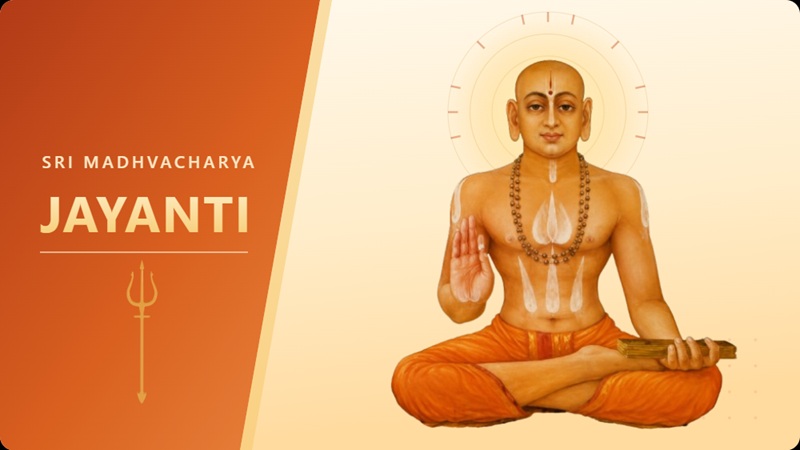
Sri Madhvacharya Jayanti is an important day for Madhva tradition and Dvaita Vedanta followers. Madhvacharya Jayanti belongs to Hinduism. Sri Madhvacharya was a major Hindu philosopher and teacher. This day reminds us of the birth of Sri Madhvacharya. Sri Madhvacharya was born in 1238 CE in Pajaka near Udupi, Karnataka. Purna Prajna and Ānanda Tīrtha, another name for Madhvacharya, spread and discussed philosophical ideas with scholars. He is traditionally regarded as the founder of the Dvaita school of Vedanta.
When Is Sri Madhvacharya Jayanti 2026?
The tithi timings can be different according to your location. You should check the local Panchang if you want to know the beginning and ending time of Madhvacharya Jayanti. The day also falls around Vijayadashami.
What Is Madhvacharya Jayanti?
Madhvacharya Jayanti is the day of the birth anniversary of Sri Madhvacharya. The day is more than a birth anniversary for followers of the Madhva tradition. It is a day to remember the spiritual path shown by their Acharya. He was a respected Hindu philosopher and teacher who established the Dvaita school of Vedanta. Devotees remember his life and teachings on this day.
Why Is Madhvacharya Jayanti Celebrated
Madhvacharya Jayanti is celebrated to honor Sri Madhvacharya and his contribution to Hindu philosophy. His teachings are very important for Lord Vishnu devotees. He explained that the individual soul and the Supreme Being are eternally distinct. The day also inspires his devotees to learn more about Dvaita Vedanta. Madhva Navami is also a separate event. It is associated with Madhvacharya's departure to Badri.
What Is Dvaita Vedanta and What Did Madhvacharya Teach?
Dvaita Vedanta is the philosophical system associated with Sri Madhvacharya. The word "Dvaita" means "dualism." Madhvacharya taught that the individual soul and the Supreme Being are not the same.
His philosophy gives importance to knowledge, devotion, and righteous living. He also encouraged people to read carefully and understand Hindu scriptures and what these are actually teaching us. His teachings describe God as independent, while souls and the material world depend upon God. His teachings provide a way to understand the relationship with God.
What Is Madhvacharya Famous For
Sri Madhvacharya is best known for establishing Dvaita Vedanta. He gave priority to Lord Vishnu in his philosophical system. Udupi became an important center of his tradition. He started the worship tradition of Lord Krishna at Udupi. He established the eight mathas connected with the temple. His writings and teachings continue through various Madhva mathas and scholars. This was an important contribution of Madhvacharya to Hinduism.
How Is Madhvacharya Jayanti Celebrated
Devotees pray and remember Madhvacharya on his Jayanti. Many people visit temples and offer prayers to Lord Vishnu and Sri Krishna. Some devotees read Madhvacharya's writings, and others listen to teachings about Dvaita Vedanta. The celebrations can vary from one place to another.
Madhvacharya Jayanti Puja Vidhi
As with other religious rituals, first you can clean the prayer area and place an image or idol of Sri Madhvacharya along with Lord Vishnu or Lord Krishna. Devotees offer flowers and fruits and light a diwa. You can also recite Vishnu prayers or read passages related to Madhvacharya's teachings. Some devotees observe a fast on Madhvacharya Jayanti. Others just do prayer and read bhajans connected with their sampradaya, Lord Vishnu, and Lord Krishna.
What Are Madhvacharya's Important Works?
His works include Brahma Sutra Bhashya and Bhagavad Gita Bhashya. These works form an important part of the intellectual foundation of Dvaita Vedanta. Sri Madhvacharya was an incarnation of Vayu. He also has a connection between Vayu, Hanuman, Bhima, and Madhvacharya. According to this traditional belief, Hanuman was an earlier manifestation of Vayu, followed by Bhima and later Madhvacharya.
Sri Madhvacharya's message is simple. Love God and become a true devotee to grow closer to Him. Read religious books to gain true knowledge and understand God better.