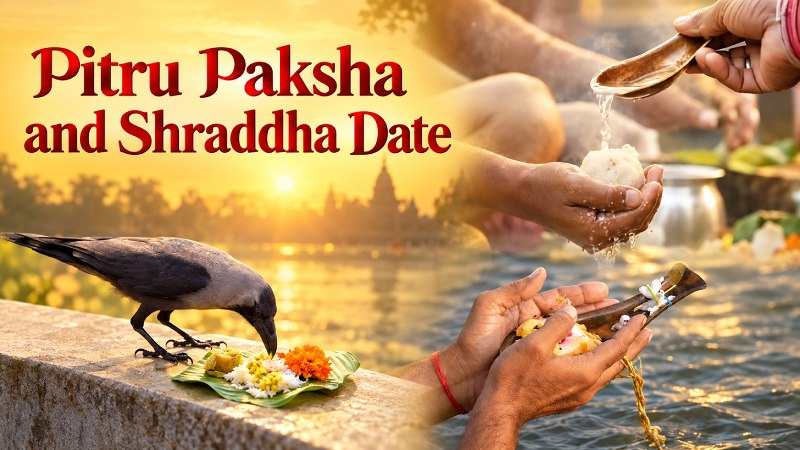
In Sanskrit, Pitru Paksha means “the fortnight of ancestors.” Pitru Paksh is also known as Shraddha. Pitru Paksha is 16 days dedicated to remembering and honoring ancestors. Hindu people pay tribute to their ancestors. Their family offers prayers, food, and water for the peace of their deceased family members.
During this period, families perform rituals such as Tarpan, Pind Daan, and Shraddha Puja with devotion. The purpose is to express gratitude, seek forgiveness for past mistakes, and pray for the peace and liberation of departed souls.
Pitru Paksha is also known by regional and traditional names such as Pitrapaksha, Pitri Paksha, Pitri Pokkho, Sorah Shraddha, Kanagat, Mahalaya, Apara Paksha, and Akhadpak.
When Does Pitru Paksha 2026 Start and End?
Pitru Paksha and Shradh are closely related. Pitru Paksha is 16 days dedicated to remembering and honoring ancestors. Shradh (Shraddha) is the ritual or offering performed for departed ancestors during this period.
| Shraddha Tithi | Date (2026) | Day |
|---|---|---|
| Purnima Shraddha | September 26, 2026 | Saturday |
| Pratipada Shraddha (Pitru Paksha Begins) | September 27, 2026 | Sunday |
| Dwitiya Shraddha | September 28, 2026 | Monday |
| Tritiya Shradh | September 29, 2026 | Tuesday |
| Chaturthi / Panchami Shraddha | September 30, 2026 | Wednesday |
| Shashthi Shraddha | October 1, 2026 | Thursday |
| Saptami Shraddha | October 2, 2026 | Friday |
| Ashtami Shradh | October 3, 2026 | Saturday |
| Navami Shraddha | October 4, 2026 | Sunday |
| Dashami Shraddha | October 5, 2026 | Monday |
| Ekadashi Shraddha | October 6, 2026 | Tuesday |
| Dwadashi Shradh | October 7, 2026 | Wednesday |
| Trayodashi Shraddha | October 8, 2026 | Thursday |
| Chaturdashi Sharad | October 9, 2026 | Friday |
| Sarva Pitru Amavasya (Pitru Paksha Ends) | October 10, 2026 | Saturday |
According to Hindu tradition, the southern direction is associated with the Pitrs, or ancestors. Pitru Paksha is observed during the Krishna Paksha of the lunar month, when special Shraddha and Tarpan rituals are performed for ancestors. Its dates are determined according to the Hindu lunar calendar and local Panchang calculations.
Which Day Should Shraddha Be Performed?
If the Hindu lunar date of a deceased person's death is known, their Shraddha is performed on the same lunar date during Pitru Paksha. For example, if a person passed away on the Ashtami Tithi of Krishna Paksha, their Shraddha is performed on Ashtami Tithi during Pitru Paksha.
If the date of death is not known, Sarvapitri Amavasya is considered important. Sarvapitri Amavasya will be on October 10, 2026.
The Shraddha time is not the same in every city. It differs according to sunrise and local Panchang calculations. Therefore, the correct time should be checked according to the Panchang of the city where the Shraddha is being performed.
Importance of Pitru Paksha
Pitru Paksha is a ritual that is performed to worship and offer Tarpan (offering of water) to the family members and lineage who have passed away.
Shraddha has great importance in Hindu tradition. Vedic texts state that the souls of a person's ancestors from the previous three generations reside in Pitru Loka. This realm is ruled by Yama, the god of death, who takes the soul of a deceased person from Earth to Pitru Loka. Shraddha rituals are performed for these three generations.
During Pitru Paksha, prayers are offered for the liberation of both the ancestors and the person performing the rituals. If those souls have taken another birth soon after death, Shraddha is believed to increase their happiness in their new birth and merge with God. Therefore, Shraddha offerings are no longer required.
Rules of Shraddha
- Shraddha is performed on a specific day during Pitru Paksha when a parent or grandparent, or family person, dies.
- Bharani Chauth and Bharani Panchami, the fourth and fifth lunar days, respectively, are assigned to those who died during the previous year.
- Avidhava Navami (“widowless ninth”), the ninth lunar day, is for married women who died before their husbands.
- The 12th lunar day is dedicated to children who have passed away and to ascetics who had renounced worldly life.
- The fourteenth day is known as Ghat Chaturdashi or Ghata Chaturdashi and is reserved for those who were killed by weapons, died in war, or suffered a violent death.
- Sarvapitri Amavasya (the Amavasya day for all ancestors) is for all ancestors, regardless of the lunar day on which they died. It is considered the main day of Pitru Paksha. If you forgot to perform Shraddha, you can perform it on this day.
What is Pitru Tarpan?
Tarpan is a ritual of offering water to the ancestors. Traditionally, black sesame seeds and Kusha grass are added to the water. The names and Gotras of the ancestors are remembered, and the water is then offered. During Tarpan, prayers are offered for the peace of the ancestors.
It is generally performed on riverbanks, at ponds, or at home and is accompanied by Vedic mantras. The ritual is performed facing south, which is associated with ancestors and ruled by Yama.
How to Perform Shraddha During Pitru Paksha
On the day of Shraddha, one should bathe in the morning and wear clean clothes. After cleaning the place of worship, the ancestors are remembered, and a Sankalp is taken.
After this, Pind Daan and Tarpan are performed according to family tradition.
Food is then offered. It is specially prepared for the ceremony. If a crow comes and eats the food, the offering is considered accepted. The crow is believed to be a messenger of Yama or the soul of an ancestor.
Cows and dogs are also fed, and Brahmin priests are given food. After the ancestors, represented by the crow, and the Brahmins have eaten, family members can begin their meal.
Afterward, prayers are offered for the peace of the ancestors. In Shraddha rituals, devotion is given greater importance than display.
Food That Is Prepared for Shraddha
Food offered to ancestors is generally cooked in silver or copper vessels and usually placed on a banana leaf or a cup made from dried leaves.
The food should include Kheer, a type of sweet rice, halwa, and milk preparation; Lapsi, a sweet porridge made from wheat grains; rice; Dal; spring bean (guar); and yellow pumpkin.
Who Should Perform Pitru Shraddha?
Traditionally, Shraddha is associated with family members. It is performed according to the traditions of a particular lineage and community. Mostly, a younger man or boy from the family performs it.
Since the rules may differ according to tradition, family members should follow their family customs or consult an experienced priest when there is confusion about who should perform the ritual.
Feeding Brahmins and Those in Need
Offering food, clothes, and Dakshina (money) to Brahmins and poor people is an important part of Pitru Paksha. It is believed that feeding others allows the offering to reach the ancestors.
Things People Avoid Doing During Sharad Period
People avoid weddings, housewarming ceremonies, and celebrations during this period because the focus is on remembering the deceased and praying for them. People traditionally avoid new purchases, celebrations, and non-vegetarian food as well. Even some people do not cut their hair or shave their beards. They don't eat the food prepared for the ancestors before it has been fully offered to them.
Regional Forms of Shraddha
In Uttar Pradesh, Bihar, Rajasthan, Haryana, and other North Indian regions, Pind Daan holds significant importance during the Shraddha period.
Pind Daan is performed at holy places such as Gaya, Prayag, Kashi, and Badrinath. These places are considered highly meritorious. Usually, Pindas made from sesame, barley, rice, milk, honey, and ghee are offered while sitting on a Kusha mat.
In Odisha, Bengal, and Assam, people often perform Sharad through Tarpan. On Mahalaya Amavasya, they take a holy bath and offer sesame seeds and water to honor their ancestors.
In Odisha, the “Bada Osha” tradition is also associated with ancestral worship. In Assam, Shraddha rituals mainly involve offerings of rice, sesame seeds, and milk.
In Karnataka, ‘Mattu Amavasya’ is celebrated, and in Tamil Nadu, Shraddha is performed on ‘Mahalaya Amavasya’. Special significance is given to offerings of vadukulam (tambulam), banana leaves, fresh and dried coconut, Brahmin meals, and dakshina.
Shraddha is known as “Bali,” in Kerala. Bananas and rice are offered at a “Kavu,” which is also a holy place.
In Nepal, Shraddha is known as “Pind Daan” or “Shraddha Karma.” The Pinds are placed on a silver or brass plate. A tradition to perform Pind Daan daily from Shravan Purnima to Krishna Paksha Amavasya at Shri Gokarneshwar Temple in Kathmandu. It is offered according to ritual procedures.
Role of Women and Modern Changes
Traditionally, Pitru rituals were performed by men, especially the eldest son. However, nowadays women have also started participating, particularly when there is no male heir in the family.
Today, many do Shraddha rituals online, have a virtual Pind Daan, or have priests at pilgrimage places like Gaya, Haridwar, or Prayagraj do the rituals on their behalf.
The method has changed, but the fundamental idea is the same: to remember and honor one's roots.
What Is the Significance of Pitru Paksha Today?
In the fast-moving, individualistic world of today, traditions like Pitru Paksha keep us grounded.
They tell us that life is not just today, but also about honoring the past. In a society such as India, family ties are sacred. Pitru Paksha is not just a religious duty, but it is also an emotional connection. A silent thank you to all those who have loved and sacrificed through the generations.
We honor the memory of our ancestors with faith, gratitude, and devotion, and keep the values of our family alive for future generations.