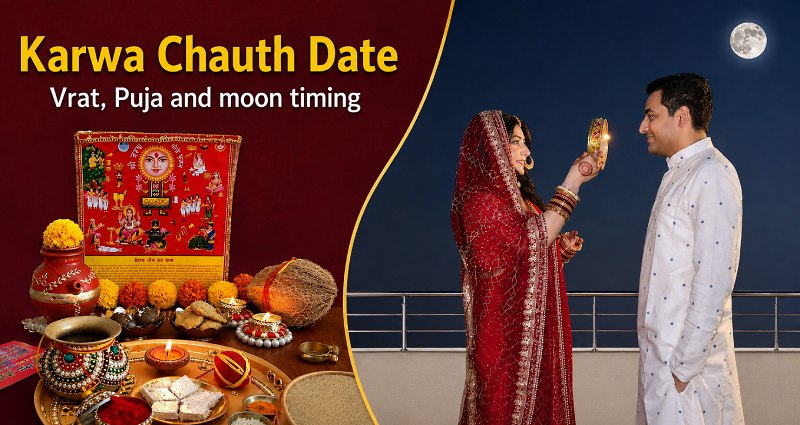
Karwa Chauth is a special festival day for married women. On this day, married women keep a fast for their husband's long and healthy life. On Karwa Chauth, women do not eat or drink anything from morning until the moon rises. The tradition of keeping the Karwa Chauth fast has been followed for many centuries. Karwa means the earthen pot used in the puja, and Chauth means the fourth day. Traditionally, married women observe a nirjala vrat without food or water from sunrise until moonrise. This festival brings a lot of joy and excitement to every home.
When is Karwa Chauth Date in 2026?
Karwa Chauth vrat, fasting and moon timing (Delhi timings)
| Event | Timing |
|---|---|
| Fasting Time | From sunrise (around 6:31 AM) to moonrise (around 8:17 PM) |
| Auspicious Puja Time | 5:38 PM to 6:56 PM |
| Karwa Chauth Upavasa Time | 05:47 AM to 08:03 PM |
| Moonrise Time | Around 8:17 PM (may vary slightly depending on location) |
| Chaturthi Tithi Begins | 01:06 AM on October 29, 2026 |
| Chaturthi Tithi Ends | 10:09 PM on October 29, 2026 |
How Is Karwa Chauth Celebrated by Women?
Women start preparations for the Karwa Chauth festival a few days before. Women apply mehndi on their hands, arms, and feet, purchase new clothes, buy beauty items, and prepare for the puja. The Karwa Chauth fast starts at sunrise and ends at night after seeing the moon and offering Arghya. Women receive gifts from their husbands and mothers-in-law on this day.
How to Keep and Break the Karwa Chauth Fast?
Women wake up early in the morning. They start the Karwa Chauth vrat by eating Sargi. Usually, Sargi should be eaten before sunrise. After this, they do not eat or drink anything throughout the day. This is called a nirjala fast.
Women do prayers and puja during the day. In the evening, they perform a special puja. Karwa Chauth is broken only after seeing the moon at night. They see the moon through the channi and then see their husband's face through the same channi/sieve. After that, water is offered to the moon, which is called Arghya. Some women offer Arghya in a group.
At the end, the married woman drinks a sip of water from her husband's hands and breaks the fast by eating something. However, if you are not following a strict fast, you can eat or drink something after the evening puja. If the moon does not rise in the evening because of clouds or bad weather, you can break your fast with the help of a picture or idol of Lord Shiva.
What Is Sargi in Karwa Chauth and What Is Included in It?
Sargi is a special meal given by the mother-in-law to her daughter-in-law early in the morning before the fast begins. Sargi usually includes pheni, sweets, fruits, and mathri. Along with food, Sargi may also include coconut, shringar items, and gifts in many places.
If the mother-in-law is not present, the elder sister-in-law, an older female relative, or the husband can also give Sargi.
How to Do Karwa Chauth Puja in the Evening?
After keeping the Karwa Chauth fast, women do not eat or drink anything throughout the day and only chant God's name. In the evening, they perform the puja.
The puja includes several things. A clay or copper kalash and karwa are filled with water and placed at the puja place. You can also light a diya and incense. Fruits, coins, turmeric, and rice are placed on the kalash and karwa. Apply a tilak and mauli to the karwa. You can also place an idol or picture of Goddess Parvati, Lord Shiva, and Lord Ganesha on a wooden platform.
You can pray and listen to the Vrat Katha before seeing the moon. You can also read the Karwa Chauth Katha yourself.
After completing the Karwa Chauth puja, you should touch the feet of your mother-in-law or elders. In the first year of marriage, you can give baya (gifts and sweets) to your mother-in-law.
Can Unmarried or Engaged Girls Keep the Karwa Chauth Vrat?
Yes, unmarried girls and engaged girls whose marriage has been fixed, or those who wish to get their desired husband, can keep the Karwa Chauth fast. Unmarried girls should keep a nirjala fast (without water) or according to their family tradition. They can keep the fast by having fruits, milk, or light food.
Pregnant, breastfeeding, or unwell women may choose not to observe a strict fast. They should decide whether to fast based on their health and family traditions.
Today, many husbands and unmarried spouses also keep the fast.
Karwa Chauth rituals may vary. This festival is more popular in North Indian states compared to South Indian states. Karwa Chauth customs and rituals can differ across Haryana, Rajasthan, Punjab, Uttar Pradesh, and other states of India.
Stories Behind Karwa Chauth Vrat
Veervati was the only sister of seven brothers. On her first Karwa Chauth, her brothers made a fake moon because they could not see her suffer from hunger. She broke her fast, but her husband died. Veervati prayed with great faith, and her husband came back to life. The story shows the power of love, faith, and devotion.
Karwa Chauth is also linked to Draupadi and Savitri. Their stories show how love, prayer, and devotion can protect a husband. Karva Mata is also worshipped as a symbol of a wife's love and devotion.
One more tradition says that when a woman's husband died, she would also be burned on his funeral pyre or die soon after his death in another way. This was called the Sati Pratha. Women did not want their husbands to die early because they believed they would also be killed with them. So, women started keeping the Karwa Chauth vrat for their husbands' long life because of this historical custom and fear.
Karwa Chauth Dress and Beauty Guide
Karwa Chauth is a special day when married women often dress like brides again. Red sarees, lehengas, jewelry, mehndi, and gajra are popular choices.
Evening Look
For the evening puja and katha, you can go for a beautiful red saree, lehenga or anarkali. Red, maroon, and pink with traditional embroidery are classic choices.
Daytime Look
During daytime, you can wear something light and comfortable like a simple suit or kurti. Karwa Chauth is a long fast, so wear comfortable and breathable clothes. Avoid tight blouses, waistbands, or anything uncomfortable.
Solah Shringar
Solah Shringar means the sixteen traditional ways of dressing up. These include bindi, sindoor, maang tikka, kajal, nath, earrings, necklace, rings, bangles, mehndi, toe rings, gajra, anklets, waist chain, and fragrance. You do not need to wear all sixteen. Although the exact list can vary by region and tradition.
Karwa Chauth Colors
In many traditions, black and white are avoided on Karwa Chauth. You can wear red, maroon, and bridal pink clothes. Mostly, women like to wear Punjabi suits, red sarees, lehengas, and Anarkali suits.
Mehndi
Mehndi is an essential part of Karwa Chauth. Women can choose full hand bridal designs, simple designs, wedding designs or even hide their husband's name in the mehndi.
Hair and Makeup
A soft bun with gajra or a braid or soft curls can complete the look. For a traditional festive look, go for a glowing base, kajal and bindi, and red or berry lipstick.
Significance of Karwa Chauth
Karwa Chauth is more than a fast. It is a festival of a woman's love and devotion to her husband and God. Married women keep the Karwa Chauth fast for their husband's long life, good health, and good fortune. Karwa Chauth is also a sacred symbol of love, sacrifice, and unbreakable trust between husband and wife. We hope this Karwa Chauth brings a lot of joy, happiness, and prosperity in your life.
Frequently Asked Questions
When is Karwa Chauth in 2026?
Karwa Chauth 2026 will be celebrated on 29 October 2026 (Thursday).
What is the Karwa Chauth puja time in 2026?
The auspicious puja time is from 5:38 PM to 6:56 PM.
What time will the moon rise on Karwa Chauth 2026?
The moon is expected to rise around 8:17 PM, though timing may vary by location.
What is Sargi in Karwa Chauth?
Sargi is a pre-dawn meal given by the mother-in-law to her daughter-in-law before the fast begins.
Can unmarried girls keep the Karwa Chauth vrat?
Yes, unmarried and engaged girls can keep the fast, often as a lighter vrat with fruits, milk, or light food.