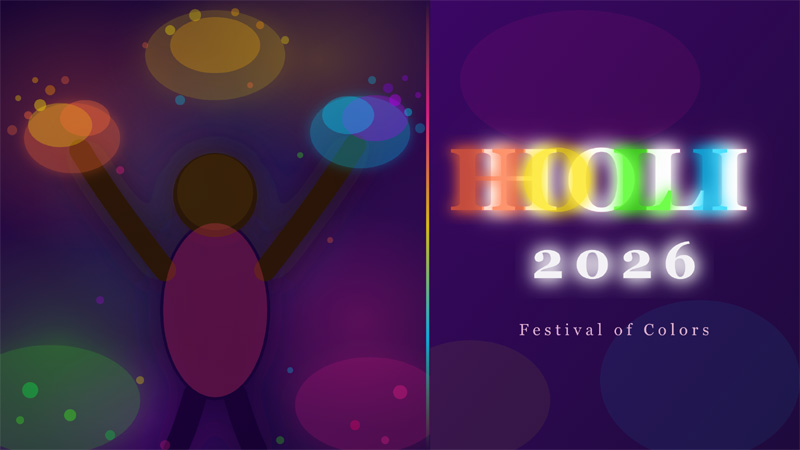
Holi is one of India's most joyful and colourful festivals, celebrated by millions across India, Nepal, and communities worldwide. Known as the "Festival of Colors," Holi marks the arrival of spring, the victory of good over evil, and the spirit of love and new beginnings.
People throw brightly colored powders called gulal on each other, and children use water guns called pichkaris to spray colored water. The celebration typically runs for one to two days — beginning with the Holika Dahan bonfire on the night before and followed by a full day of colors, music, dancing, and festive food.
The Story of Holika Dahan
Holi has its roots in the ancient story of Prahlad and Holika, symbolizing the eternal victory of good over evil.
Prahlad was a devoted follower of Lord Vishnu. His father, the proud King Hiranyakashipu, despised this devotion and tried repeatedly to punish him. Hiranyakashipu's sister Holika had a special blessing that made her immune to fire. She sat in flames holding Prahlad, hoping to destroy him. But because her intent was evil, the blessing failed — Holika burned while Prahlad, protected by his pure faith, emerged unharmed.
This story is remembered through Holika Dahan — a bonfire lit on the night before Holi. The fire symbolizes the destruction of evil, pride, and injustice. Mentions of spring celebrations connected to Holi appear in ancient Puranic texts, giving the festival deep historical and spiritual roots.
When is Holi in 2026?
Holi in 2026 will be celebrated on Tuesday, March 4, with Holika Dahan on the evening of Monday, March 3. It falls on the full moon day (Purnima) in the Hindu month of Phalguna.
🔥 Holika Dahan: Monday evening, 3 March 2026
The most famous Holi celebrations take place in Mathura and Vrindavan (Uttar Pradesh), the birthplace associated with Lord Krishna, as well as across the entire country.
Holi Around India
Holi is known by different regional names across India, each reflecting local traditions and cultural flavor. In North India it is called Dhulandi; in Rajasthan, Rangwali Holi; in Punjab and the Caribbean, Phagwah; in West Bengal and Assam, Dol Jatra; and in the Sikh tradition, Hola Mohalla. The Braj region is famous for Lathmar Holi.
The Sikh festival Hola Mohalla — started by Guru Gobind Singh Ji in 1701 to showcase warrior skills and martial arts — is celebrated three days after Holi at Anandpur Sahib. It is a proud tradition of strength, courage, and community spirit.
Colors and Their Meanings
Each color used in Holi carries a symbolic meaning, connecting the celebration to nature, emotion, and spiritual values. Red represents love and fertility; orange stands for courage and bravery; yellow conveys happiness and prosperity; green symbolizes new life and harvest; blue is associated with Lord Krishna's skin; and purple signifies magic and mystery.
Traditional Holi Foods
Food is an essential part of Holi celebrations — sharing sweets and snacks with family and neighbors expresses love and goodwill. Popular Holi foods include Gujiya (fried pastry with khoya and dry fruits), Thandai (a cold drink with saffron, nuts, and spices), Laddoo (sweet round balls made of besan or motichoor), Malpua (sweet pancakes in sugar syrup), Barfi (milk-based fudge in many flavours), and Papri Chaat (a savory street snack).
Eco-Friendly & Safe Holi
Many people today choose to celebrate responsibly — using natural colors and being mindful of health and the environment. Chemical colors can harm skin, eyes, and waterways. Here are some tips for a safe Holi:
Use natural colors made from turmeric, sandalwood, flowers, and herbs. Apply oil or moisturizer before playing to protect your skin and hair. Wear sunglasses or avoid throwing colors near faces to guard your eyes. Save water by using dry colors and limiting water balloons. Be inclusive by respecting those who do not wish to play. Supervise children and use soft, safe colors for kids.
Cultural & Social Importance
Beyond its religious roots, Holi is a powerful social celebration. It breaks down barriers of age, caste, and status — everyone plays together with the same colors. People greet each other with "Happy Holi!" and apply gulal as a sign of friendship and goodwill. It is a time to forgive past misunderstandings and renew relationships.
Music, dance, folk songs, and festive drum beats (dhol) fill the air. While villages celebrate with traditional folk customs and temple rituals, cities organize large community gatherings, cultural performances, and Holi parties. Many people wear simple white clothes so the colors show brightly — a symbol of equality and shared joy.
Holi Around the World
Holi's cheerful spirit has spread far beyond India. Communities across Europe, North America, Southeast Asia, and beyond now celebrate with color-themed events and cultural gatherings. Schools, universities, and offices host Holi programs to encourage teamwork and cultural appreciation.