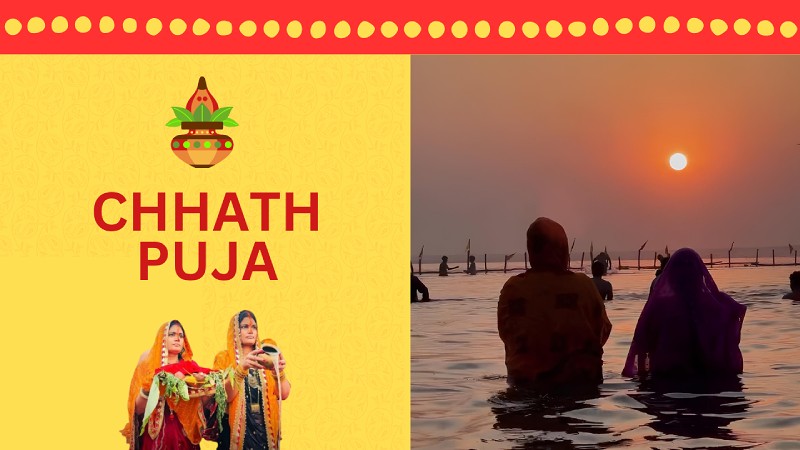
Chhath Puja is celebrated twice a year according to the Hindu calendar. Kartik Chhath is the major and more widely celebrated festival in October/November. It comes shortly after Diwali. Chaiti Chhath is celebrated in the Hindu month of Chaitra around March or April.
Date of Chhath Puja in 2026
| Day | Date | Ritual |
|---|---|---|
| Day 1 | Friday, November 13, 2026 | Nahay Khay |
| Day 2 | Saturday, November 14, 2026 | Kharna / Lohanda |
| Day 3 | Sunday, November 15, 2026 | Sandhya Arghya |
| Day 4 | Monday, November 16, 2026 | Usha Arghya & Parana |
The Panchang timing for Patna gives approximately 5:01 PM sunset on November 15 and 6:07 AM sunrise on November 16. Chhath Puja timing may vary according to the area.
What is Chhath Puja?
Chhath Puja is a four-day Hindu festival. Chhath Puja is dedicated to the Sun God (Surya) and Chhathi Maiya to express gratitude for life on Earth. Chhath Puja is also known as Surya Shashti, Chhathi, Chhath Parv, and Dala Puja. During Chhath Puja, devotees worship the Sun God standing in water or near a river or pond to ensure prosperity, well-being, and progress. Chhath Puja is celebrated by worshiping Surya Dev and Chhathi Maiya. They express gratitude for the blessings of nature and life. They also pray for the good health and protection of their families.
What is the importance of Chhath Puja?
Chhath Puja is a Vedic Hindu festival dedicated to the Sun God Surya and Chhathi Maiya. It's a way of saying thank you for keeping life going here on this planet. As you read above, devotees worship the Sun as the source of energy, health, vitality, and life. Traditionally, Surya is worshiped as the source of light, energy, and life. Chhathi Maiya is worshipped for blessings related to health, longevity, and the well-being of children. She is described as a form of Prakriti and is traditionally associated with Surya. Traditionally, people also connect this festival with figures such as Lord Rama, Sita, Draupadi, and the Pandavas. There is more than one traditional story associated with this festival.
What food is prepared during Chhath Puja?
Thekua is one of the most important and widely recognized prasad offerings of Chhath Puja. The festival includes other traditional sweets like Rasiyaw (Rasiya), Kasar Ladoo, Pirukiya, Kaddu Bhaat, Lauki Bhaat, and Chana ki Ghugni. Chhath Puja foods are generally prepared with wheat, rice, jaggery, coconut, fruits, nuts, and ghee. Each region and family tradition has its own special dishes and ways of cooking them.
What is Thekua, and why is it offered during Chhath Puja?
Thekua is considered the most important prasad of Chhath Puja. Thekua is a traditional sweet snack that is associated with Bihar, Jharkhand, and eastern Uttar Pradesh. It is made from whole wheat flour, jaggery (or sugar), and ghee. Occasionally, it is flavored with fennel seeds, cardamom, and coconut. The dough is typically pressed into decorative molds and then deep-fried until it becomes crisp and golden. It can remain fresh for many days. After presenting it to Surya Dev and Chhathi Maiya, Thekua is distributed among the families together.
Where is Chhath Puja mainly celebrated?
Chhath Puja is mainly celebrated in Bihar, Jharkhand, and eastern Uttar Pradesh in India, as well as parts of Nepal. Bihar is the primary and most significant region for the festival.
Chhath Puja is widely observed in Jharkhand with community rituals near rivers and other water bodies. It is also popular in the Mithila and Terai regions of Nepal. It is also celebrated by communities from these regions living in other parts of India and worldwide.
Chhath Puja vrat
Chhath Puja is considered a difficult vrat because it is a 36-hour waterless fast. It begins after Kharna on the second day and continues until after Usha Arghya on the fourth day. Any devotee who is able to complete the fast may observe it. Devotees can eat Kaddu Bhaat, Arwa Rice, or channa dal before starting their fast on Day 1 of the vrat. Many vratins follow additional austerities, which may include sleeping on the floor and following strict rules of purity. Vratins also have to do four-day prayers and offerings in the morning and evening.
Where can you do Chhath Puja?
Chhath Puja can be performed at home if you cannot visit a riverbank or public ghat. Chhath Puja can also be celebrated without a river or pond. You can create a small freshwater basin, pond, or water tank at home or in a community.
How to Perform Chhath Puja?
Chhath Puja is a four-day spiritual festival. You may not need a temple, idol, or priest for Chhath Puja because the central worship of Chhath Puja is directed toward Surya. People worship both the setting and rising sun. They offer Sandhya Arghya to the setting sun and Usha Arghya to the rising sun. The following is the process to perform its Puja and rituals:
Day 1: Nahay Khay
Nahay Khay is the first day of the four-day Chhath Puja festival. This day is dedicated to worshipping the Sun God and Chhathi Maiya. The devotee takes a holy bath, cleans the home and cooking area, and prepares a simple vegetarian meal. Traditionally, the meal includes lauki, chana dal, and arva rice, prepared with rock salt and without onion or garlic.
Day 2: Kharna
Kharna is the second day of the Chhath festival. The devotee observes a day-long fast and eats only after sunset. Jaggery kheer and wheat chapatis are prepared as prasad and offered to the Sun before the devotee eats. People observe a nirjala fast from sunrise to sunset. After Kharna, a strict 36-hour waterless fast begins.
Day 3: Sandhya Arghya
Devotees continue the nirjala fast throughout the day. In the evening, they go to a river, pond, or any other suitable body of water and offer arghya to the setting sun. The fast continues overnight. In the evening, devotees gather at a riverbank or pond and offer arghya to the setting sun while singing traditional folk songs.
Day 4: Usha Arghya and Parana
Before sunrise, devotees return to the water body and offer arghya to the rising sun. The fast is then completed with parana, followed by the sharing of prasad with family and others. Usha Arghya is the final and 4th-day morning prayer and water offering made to the rising sun. Traditional offerings such as thekua, seasonal fruits, sugarcane, and coconut are arranged in a bamboo soop.
Things to avoid during Chhath Puja
During Chhath Puja, devotees are expected to follow strict rules of purity, cleanliness, and discipline. People have to avoid non-vegetarian foods and anger, arguments, abusive language, and negative thoughts. Chhath food is traditionally prepared without onion and garlic. Rock salt is also used instead of regular salt. You also should not taste or eat prasad before it is offered to Lord Surya. You wear clean clothes and maintain strict cleanliness throughout the observance.
The story behind Chhathi Maiya
According to a traditional story, Chhathi Maiya is associated with Devi Shashthi. She is a goddess believed to protect children and bless families with health and offspring. She is described as a form of Prakriti and is traditionally associated with Surya, the Sun God.
The story is about King Priyavrata and Queen Malini, who could not have a baby. They did a ritual and were blessed with a son, but unfortunately the child was born dead. Grieving, the king met Mata Shashthi in his prayer for help. She called herself the guardian of children and the producer of offspring.
The goddess instructed the king to worship her. She got her child back alive after taking her advice. According to tradition, this story became associated with the worship of Chhathi Maiya and Chhath Puja.
What is Kosi Bharna in Chhath Puja?
Kosi Bharna is a traditional Chhath ritual observed by some families on the night of Sandhya Arghya. A structure is traditionally made using sugarcane stalks, under which earthen lamps and baskets containing offerings are placed. Customs vary between families and regions.
What are Soop, Sup, and Daura in Chhath Puja?
Soop, Sup, and Daura are traditional bamboo baskets used to carry Chhath Puja offerings. Devotees arrange Thekua, fruits, sugarcane, coconut, sweets, and other seasonal offerings in these baskets. Then they take them to the ghat or water body for Sandhya Arghya and Usha Arghya. The names and basket styles may vary by region and family tradition.
Chhath Puja reflects deep devotion to the Sun God and Chhathi Maiya, and it remains one of the most disciplined and community-driven festivals of Bihar, Jharkhand, and Nepal. To keep track of this and other Hindu festivals through the year, check the 2026 calendar on My Tithi.