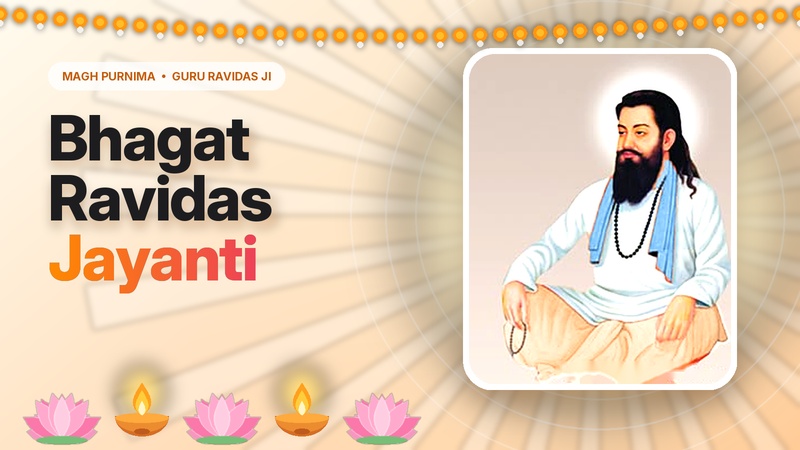
Bhagat Ravidas Ji was a well-known saint and social reformer of the 15th century. He played an important role in the Bhakti movement. He is also known as Guru Ravidas or Raidas. Bhagat Ravidas Ji is deeply respected in Sikhism and Hinduism.
When is Bhagat Ravidas Jayanti in 2027?
This year, the SGPC will celebrate his 650th birth anniversary. Special religious events will be organized at temples and gurdwaras on this occasion. Bhagat Ravidas Jayanti is celebrated every year with Nagar Kirtans, religious gatherings, prayers, and langar at temples and gurdwaras.
| Event | Date |
|---|---|
| ਭਗਤ ਰਵਿਦਾਸ ਜੀ ਦਾ 650ਵਾਂ ਜਨਮ ਦਿਹਾੜਾ | ਸ਼ਨੀਵਾਰ, 20 ਫਰਵਰੀ 2027 |
When and where was Bhagat Ravidas Ji born?
Bhagat Ravidas Ji was born on January 30, 1399, in Seer Govardhanpur, near Varanasi (Kashi), Uttar Pradesh, India. However, historical sources differ regarding his exact birth year.
Who were the parents of Bhagat Ravidas Ji?
His father was Santokh Das, and his mother was Kalsa Devi. However, some historical sources mention different names. His family worked in leathercraft, making and repairing shoes. Ravidas Ji also did the same work. But he used to say that work is neither big nor small; the real thing is devotion and good deeds.
Early Life and Childhood of Bhagat Ravidas Ji
From childhood, Ravidas Ji was interested in devotion to God. Bhagat Ravidas Ji worked as a cobbler before becoming a famous saint. It is said that he served ascetics and saints with immense dedication. He would make or repair shoes for sadhus and saints without charging them any money.
Who Was the Guru of Bhagat Ravidas Ji?
Swami Ramanand Ji was the spiritual guru of Bhagat Ravidas Ji. It is believed that Ravidas Ji became his disciple. Bhagat Kabir Ji was Tulsidas contemporary, and both had great respect for each other. Some people also believe that Mirabai considered him her guru.
What Is Begumpura in the Teachings of Ravidas Ji?
Ravidas Ji wanted to establish a society where people did not discriminate against one another based on caste, social status, or wealth and poverty. A place with no pain or anxiety, no taxes, and with equality and universal brotherhood. He named this society Begumpura ("the city without sorrow"), where everyone lives with dignity and freedom.
What Were the Teachings of Bhagat Ravidas Ji?
He taught devotion to a formless and omnipresent God (Nirguna). He valued purity of heart and good deeds above any form of discrimination. He strongly opposed caste hierarchies and untouchability. He believed everyone deserved respect, regardless of their social background.
Bhagat Ravidas Ji's Hymns in Guru Granth Sahib Ji
Guru Ravidas was much more than a poet. He composed several religious writings, including 41 hymns compiled in 16 Ragas. These are included in the sacred Sikh scripture, Sri Guru Granth Sahib Ji (Adi Granth) compiled by Guru Arjan Dev Ji. This is why he is also deeply respected among Sikhs and known as Bhagat Ravidas Ji. His other literary collections include Panch Vani, Raidas Bani, Raidas Ji Ki Sakhi Tatha Pad, and Prahlad Leela.
One of his most famous sayings is "Man Changa To Kathauti Mein Ganga." It means that if your mind is pure, even the water in a household vessel is as sacred as the Ganga. A religious tradition known as the Ravidassia Panth is based on the teachings and spiritual philosophy of Guru Ravidas Ji.
When Did Bhagat Ravidas Ji Pass Away?
It is believed that he left this world in Varanasi around 1527. Today, a large temple dedicated to him stands there, where his birth anniversary is celebrated every year on Magh Purnima.
Prominent temples and gurdwaras dedicated to Bhagat Ravidas Ji include Shri Khuralgarh Sahib, Shri Guru Ravidas Janam Asthan Varanasi Mandir, and Shri Guru Ravidas Mandir (Chak Hakim).
Guru Ravidas taught us that a person's worth depends on their good deeds and true devotion. A person's character should not be judged by their caste, wealth, or social status.