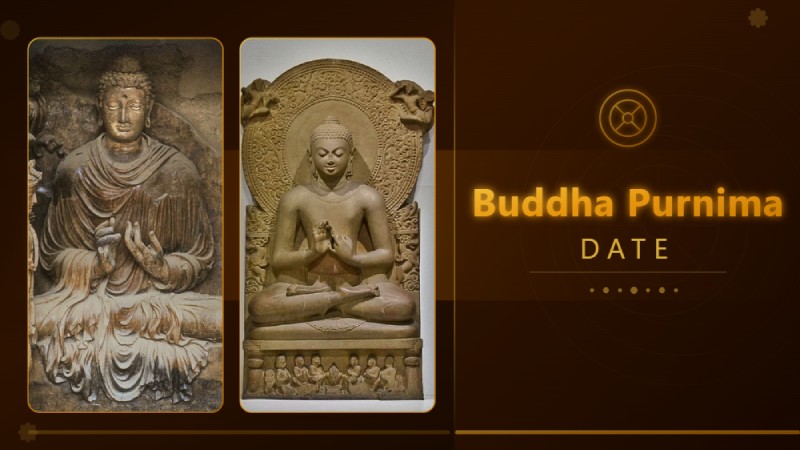
Buddha Purnima, Buddha Jayanti, or Vesak is a holy festival. People celebrate this day as the birth of Mahatma Buddha. It is marked every year on the full moon of the Vaisakha month (April/May) to honor the birth, wisdom, and passing (Parinirvana) of Gautama Buddha.
When is Buddha Purnima in 2026?
In 2026, Buddha Purnima falls on Friday, 1 May. It marks the 2588th Birth Anniversary of Gautama Buddha. Buddha Purnima is an official public holiday in India. Central government offices, banks, and many businesses stay closed. Schools and learning centers are also generally closed on this day.
Begins: 09:12 PM on Apr 30, 2026
Ends: 10:52 PM on May 01, 2026
Gautama Buddha’s birth name was Siddhartha Gautama. He was a spiritual teacher and traveler. He lived in the eastern Indo-Gangetic plains. He founded Buddhism religion. The word “Buddha” means “the awakened one.” Buddhist historians says, Gautama Buddha was born in Lumbini (now in Nepal) into a royal family around the 6th or 5th century BCE. However, he left his royal life to become a wandering holy man. After living a simple life with self-discipline and deep meditation, he gained nirvana at Bodh Gaya, which is now in Bihar, India. The Buddha traveled across the lower Indo-Gangetic plains, spreading his teachings and forming a community of monks called the sangha. He died at the age of eighty in Kushinagar in UP, India and attained parinirvana, meaning “final freedom from all worldly existence.”
Buddha Purnima is also called the "Triple Blessed Day" (or Vesak) because three great events in the life of Gautama Buddha, his birth, his gaining of wisdom, and his passing into Mahaparinirvana. Buddha Purnima marks three key events in the life of Lord Buddha:
- He was born in Lumbini, Nepal.
- Mahatma Buddha attained wisdom under the Bodhi tree in BodhGaya.
- He died and reached Nirvana in Kushinagar.
Why is it called Buddha Jayanti or Vesak?
Buddha Jayanti and Vesak are names for the same holy festival marking the birth, wisdom, and passing (parinirvana) of Gautama Buddha, which are thought to have happened on the same full moon day. "Jayanti" means birthday in Sanskrit, while Vesak comes from the Pali word 'Vesakha' or Sanskrit 'Vaisakha', which refers to the lunar month.
Buddha Purnima is a very important day in any spiritual person's life because it is the 3rd purnima after the earth shifts to the northern path of the sun. After nearly eight years of very hard and body-damaging efforts, Gautama had grown very weak. He had been a Samana for 4 years. The main practice for a Samana was to walk and never look for food, just walking and fasting. This broke his body down almost to the point of death. At this time, he reached the river Niranjana. He tried to cross it, but halfway through, his body was so physically weak that he could not take one more step.
How is Buddha Purnima Celebrated?
Buddha Purnima is marked with great spiritual joy across countries like India, Nepal, Sri Lanka, Thailand, Myanmar, and more. Some common customs and traditions include:
People go to monasteries and Buddhist holy places. They offer prayers, candles, incense sticks, and flowers. They also read Buddhist texts and think deeply about Buddha's teachings. People give food and help to monks and those in need.
In India, the holy city of Bodh Gaya becomes the heart of the celebration. Thousands of followers and monks from all over the world gather under the Bodhi tree. Followers from all over the country wear white clothes, share warm greetings, and spread his teachings (dharma). Bodhgaya in Bihar, where Lord Buddha is said to have gained wisdom beneath a banyan tree, holds one of the most lively celebrations. The Uttar Pradesh town of Sarnath, close to Varanasi, also glows during this festival because it was there that Lord Buddha gave his first talk to his followers.
Along with bathing, cleaning the home, and sprinkling holy Ganga water inside, Buddha followers on this day light candles and decorate the home with flowers. At the front door, a Swastika is drawn using Haldi-Kumkum, and along with lighting a candle, milk is also poured near the Bodhi Tree.
A small Buddha idol is also placed in a bowl full of water, which is decorated with bright colored flowers, fruits, and Kheer, which is then given out to followers as Prasadam.
Why Do People Wear White on Buddha Purnima?
People wear white on Buddha Purnima to stand for purity, peace, and spiritual growth. White clothes show inner peace, simplicity, and a move away from pride. These act as a reminder of one's spiritual self rather than just the physical self.
What to Eat on Buddha Purnima?
The custom of eating kheer (sweet rice pudding) on Buddha Purnima honors a village woman named Sujata who offered milk rice to Siddhartha Gautama, ending his six years of hard fasting. This act gave him the strength to reach wisdom, marking a turning point where he chose the "Middle Way." Buddhists stay away from non-vegetarian food on Buddha Purnima to honor the core value of Ahimsa (non-violence) and show care for all living beings. This act shows respect for Buddha's teachings, which aim to avoid adding to the harmful results of killing. People stay away from non-vegetarian food and strong spices like garlic, onion, scallions, and chives.
What Should You Not Do on Buddha Purnima?
You must stay away from bad actions such as lying, gossiping, or taking part in any form of harm. You should also try to keep your mind free from bad thoughts and feelings such as anger, jealousy, and hate. You can keep a positive and caring attitude toward others. Do not wear leather items, as they involve harm to animals, which goes against the value of ahimsa (non-violence) taught by Gautam Buddha. Do not eat non-vegetarian food, alcohol, or other harmful drinks. Fasting or a vegetarian diet is preferred on this special day.
In Which Countries Buddha Purnima Celebrated
Buddha Purnima, or Vesak, is mainly celebrated in South and Southeast Asian countries with large Buddhist groups, including India, Nepal, Sri Lanka, Thailand, Cambodia, Laos, Myanmar, Bhutan, Indonesia, and Singapore. It is also widely observed in China, Japan, Korea, Taiwan, Vietnam, Mongolia, and the Philippines.
Vaisakha honors the birth, wisdom, and death of Gautama Buddha. This day is a reminder of the deep spiritual thinking that started in this land and the long-lasting effect it has had on the world. Buddha's teachings go beyond cultural and religious limits. His message of peace, respect, and understanding is especially important in today's world. Buddha Purnima pushes people to follow the path Buddha laid out, encourages people to focus on finding inner peace, and provides time for self-awareness. Buddha Jayanti teaches the value of letting go of attachment and wants, leading to a more peaceful life. Buddha Purnima is a day of thankfulness.